
Erectile Dysfunction Treatment: How Pelvic Floor Physical Therapy Can Help
If you are struggling with erectile dysfunction (ED), you’re far from alone. Statistics show that ED affects nearly 18 million people in the U.S. over the age of 20. And despite the common myth, ED isn't just an "older person’s problem." Research indicates that around 11% of sexually active people aged 18 to 31 experience mild ED, while nearly 3% deal with moderate-to-severe symptoms. However, even when people recognize they need help for ED, stigma and attempts to self-treat often prevent them from seeking expert care.
The good news is that ED is highly treatable! Pelvic floor physical therapy (PFPT) offers a non-invasive, evidence-based approach that addresses the root causes, whether they’re physical, related to anxiety, or a combination of both.
What is Erectile Dysfunction (ED)?
Erectile dysfunction is the inability to get or keep an erection firm enough for sexual activity. This isn’t limited to just "getting" an erection; it also includes losing rigidity during sex, and often occurs alongside issues such as premature ejaculation and difficulty reaching orgasm.
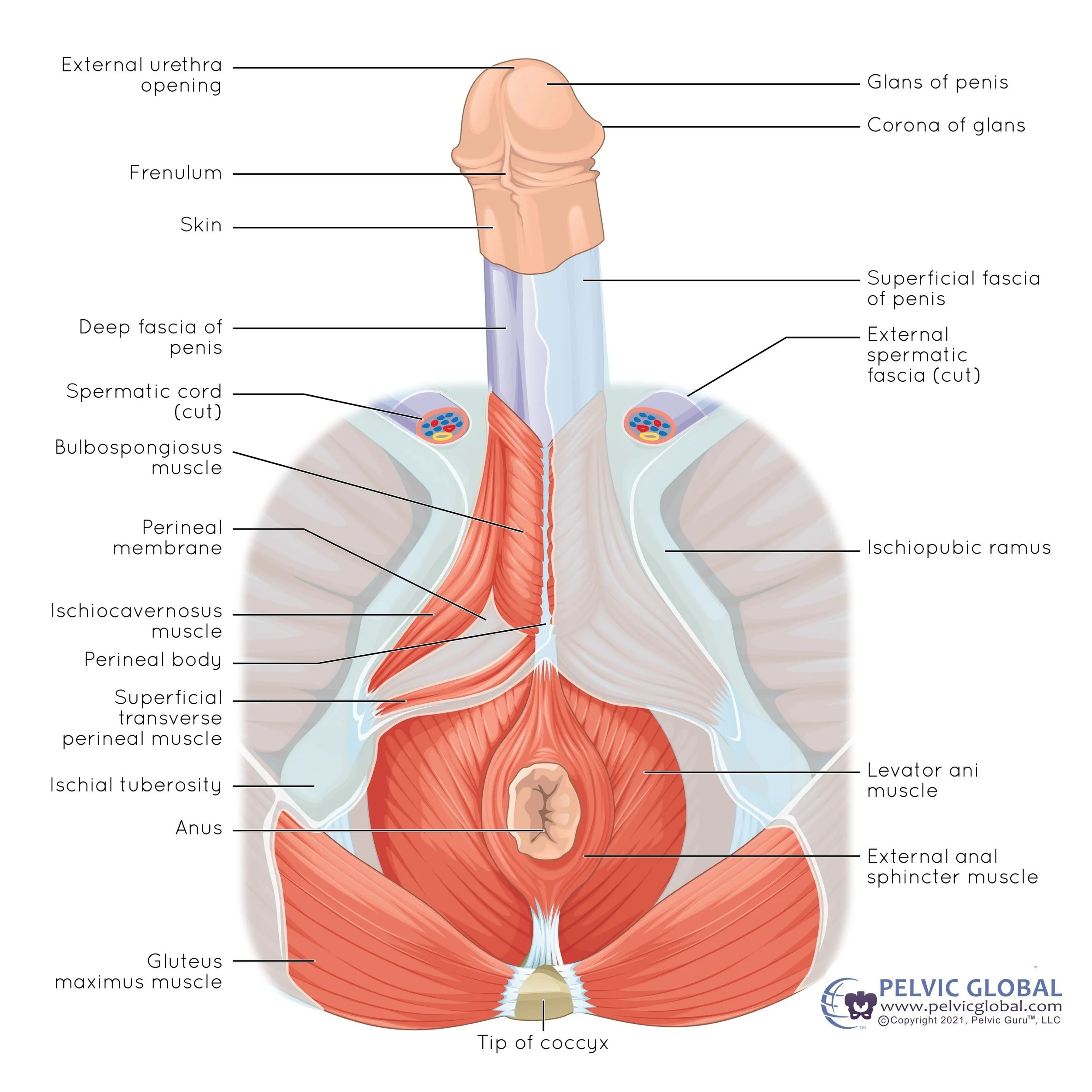
Illustration of pelvic floor anatomy in a person with a penis, showing the muscles, connective tissue, and structures involved in erectile function and pelvic support.
Permission to use copyrighted image from Pelvic Guru, LLC
What Are the Physical & Lifestyle Causes of Erectile Dysfunction?
While many factors contribute to ED, the underlying cause is often related to blood flow or nerve signals. Common factors include:
Health Conditions: Diabetes (which affects over 50% of people with ED), cardiovascular disease, and high blood pressure.
Lifestyle: Smoking, high stress, and low physical activity.
Medications: Certain antidepressants or blood pressure meds.
Physical Trauma: Cycling injuries, heavy weightlifting with poor form, or recovery from prostate or gender-affirming surgeries.
Pelvic Floor Issues: Muscles that are too tight, too weak, or uncoordinated.
The Connection Between Pelvic Floor Muscles and Erections
Your pelvic floor muscles act like a pump and a valve. They work to increase blood flow to the penis, trap that blood to maintain rigidity, and compress veins so the blood doesn't leave too quickly. When these muscles are dysfunctional, they can’t do their job. Here is what surprises most patients: the problem is often tension, which can cause weakness.
Many people spend years "gripping" their core due to stress, poor posture, or heavy lifting (for instance, in our clinic we sometimes see younger people with ED who also do CrossFit-style workouts and tend to hold a lot of tension in their core and pelvic floor). This chronic clenching (often subconscious) leaves the pelvic floor in a semi-contracted state. If a muscle can’t fully relax, it loses its power to contract effectively when you actually need it.
Can Pelvic Floor Physical Therapy Help ED?
Yes! Research shows that targeted pelvic floor training (especially when combined with biofeedback) leads to significant improvements in as little as three months. Instead of just masking the symptoms, PT helps you retrain the muscles to relax and contract at the right times. By restoring this natural coordination, you can improve the quality of your erections and, more importantly, regain the confidence that your body will work the way it’s supposed to. And we often collaborate with other clinicians, such as primary care providers, urologists, endocrinologists, and sex therapists, so your ED care is coordinated, comprehensive, and fits within your overall treatment plan.
What to Expect During Pelvic Floor PT for ED
Your first visit is a comprehensive "deep dive" into how your body moves. We look at:
Medical History: Reviewing medications, cardiovascular health, and surgical history.
Movement Patterns: We assess your posture, breathing mechanics, and how you hold tension.
The Muscles: We evaluate pelvic floor strength, endurance, and—most importantly—the ability to fully relax. This can be assessed rectally or externally along the perineum.
Treatment often includes:
Manual therapy to release tight tissue.
Biofeedback to help your brain connect with your muscles differently.
Breathing retraining to lower the "fight or flight" response in your nervous system.
Posture correction to stop chronic core-gripping.
Specific exercises to address tension and weakness.
Keep in mind that you are always in control of what we assess, can decline any part of the exam, and can pause or stop at any time.
How Anxiety Causes Erectile Dysfunction: Breaking the “Worry-Loop”
For many, ED starts with a physical fluke, perhaps a stressful day or one too many drinks. This creates a "worry loop." The next time you're intimate, you start "spectatoring"—watching yourself from the outside, wondering, Is it going to happen this time?
This anxiety triggers an adrenaline rush. Adrenaline redirects blood away from your genitals and toward your heart and lungs (the "fight or flight" response). This can result in you losing an erection…because you’re worried about losing it.
However, if you still get erections during masturbation or wake up with an erection, your “hardware” is likely working fine. The issue is likely the nervous system, which PFPT (along with sex therapy) can help regulate.
Redefining Intimacy and Sexual Wellness
When you lose an erection during sex, it’s tempting to pull away or shut down out of shame. But disconnecting actually makes the problem worse by amping up your stress. By staying close and focusing on other ways to enjoy intimacy with your partner, you tell your nervous system that you’re safe. When you take the pressure off, your adrenaline levels drop—which is often exactly what allows an erection to return.
Want to learn more? Check out our Under the Hood podcast Episode 2: 5 Surprising Ways to Fix Erectile Dysfunction for a deeper look at addressing ED.
Get Help for Erectile Dysfunction in Boston
Whether you’re 25 or 55, you don’t have to just "deal" with ED. It’s a complex issue, but there are many effective treatment options to explore. You deserve to feel confident and enjoy sex without the constant weight of worry.
Ready to get back to feeling like yourself? Book a consultation at Boston Pelvic PT today. We offer virtual and in person sessions here in Melrose, MA. We will create a personalized plan to help you get back to feeling like yourself again.
Research & Sources: