
Pelvic Organ Prolapse: Symptoms, Myths, and How Pelvic Floor PT Can Help
Pelvic organ prolapse happens when the bladder, uterus, or rectum shifts lower than its natural position. It can sound frightening, especially if you picture your organs completely falling out of your body (they won’t). Although the diagnosis and symptoms can be very stressful, prolapse is actually fairly common and very treatable, especially with pelvic floor physical therapy. To help you understand what’s happening in your body and how to get your quality of life back, here’s a look at what prolapse is, the causes, answers to common questions, and the full range of treatment options available.
What Is Pelvic Organ Prolapse?
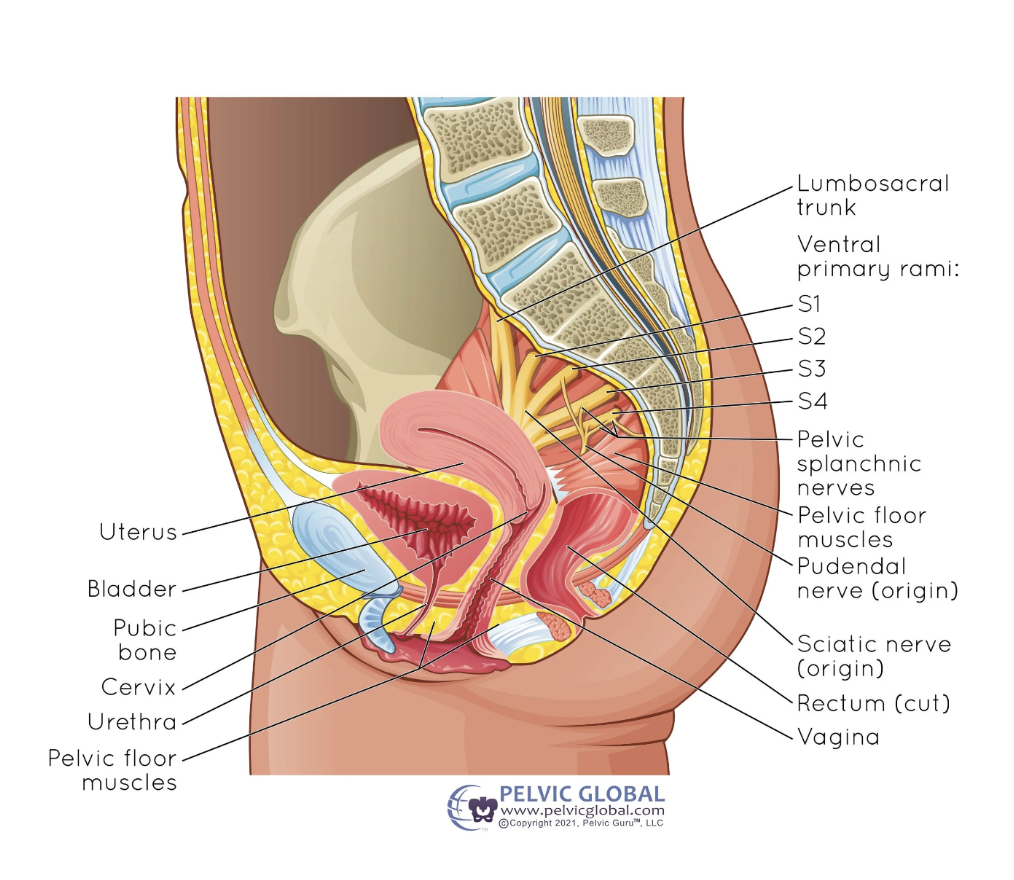
Anatomy of the pelvic floor and surrounding structures involved in pelvic organ prolapse. Image used with permission from Pelvic Guru®, LLC as a Pelvic Global Member.
Your bladder, uterus, and colon are held in place by ligaments and fascia, the connective tissue that anchors them to your bones and surrounding structures. Prolapse happens when that support system weakens, and one of these organs shifts lower than its supposed to.
What Does Prolapse Look and Feel Like?
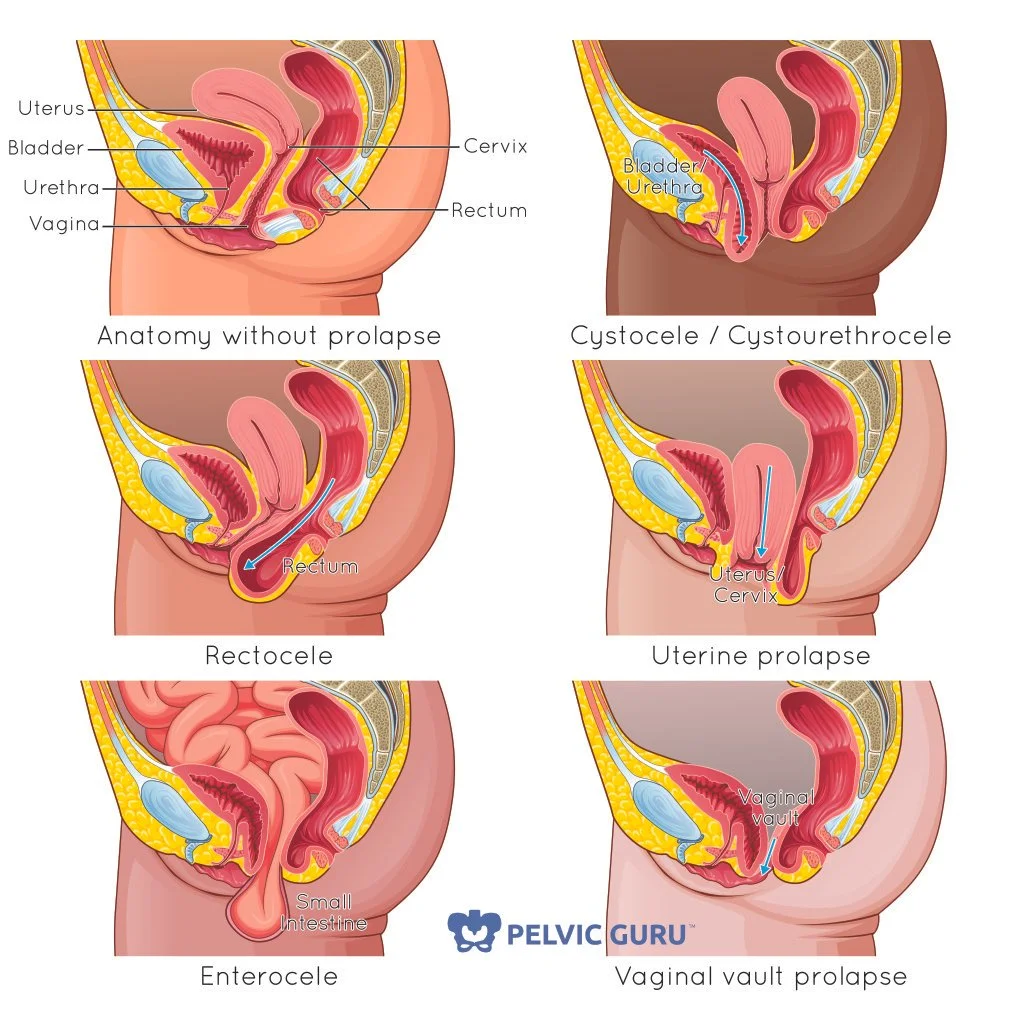
Anatomical illustrations of different types of pelvic organ prolapse. Image used with permission from Pelvic Guru®, LLC as a Pelvic Global Member.
There are a few different types of prolapse, depending on which organ is involved:
Bladder prolapse (cystocele) – the bladder drops into the front wall of the vagina.
Uterine prolapse – the uterus drops down into the vaginal canal and can sometimes be seen at the opening.
Vaginal vault prolapse – the top of the vagina drops (often after a hysterectomy).
Rectocele – the rectum bulges into the back wall of the vagina.
Enterocele – the small intestine bulges into the upper part of the vagina.
The earliest signs of prolapse may be subtle: a feeling of pressure or heaviness, or a sensation like a tampon is in place when there isn't one. Some people with a rectocele describe feeling a “pocketing” sensation during a bowel movement. These symptoms tend to be mild in the morning and build up as the day goes on, since gravity and time on your feet both play a role.
What Causes Prolapse, and What Does Pregnancy Have to Do With It?
Vaginal delivery is a major risk factor for prolapse, particularly when labor is long and intense and involves a lot of hard pushing. But some people have a straightforward delivery, and then prolapse seems to show up out of nowhere weeks later. That delay often comes down to postpartum swelling. In the first few weeks after having a baby, swelling can mask what's going on underneath. As it subsides, the sensation of heaviness becomes more noticeable, which is then when people first reach out for help.
Prolapse isn’t just a postpartum issue, though - it can show up even in people who have never been pregnant. Athletes who repeatedly load their core and pelvic floor - think runners, gymnasts, or heavy lifters - can also develop prolapse. Anything that makes you strain or bear down repeatedly - like chronic constipation or coughing - can put extra pressure on the pelvic floor and contribute to prolapse. And lower estrogen levels can weaken pelvic support tissues, which is why prolapse is more common as we get older.
What Are the Stages of Pelvic Organ Prolapse?
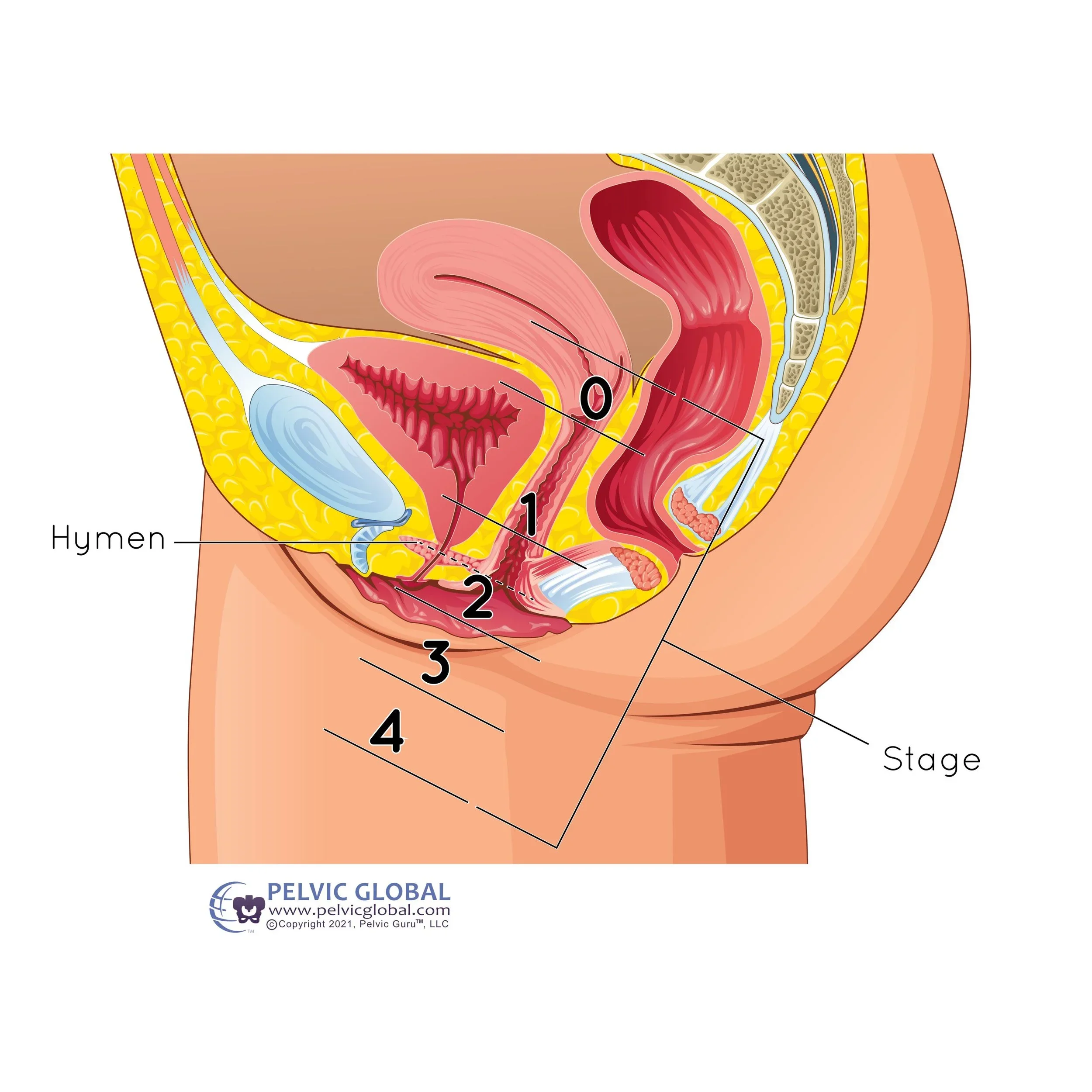
Diagram showing the stages of pelvic organ prolapse from stage 0 to stage 4. Image used with permission from Pelvic Guru®, LLC as a Pelvic Global Member.
Prolapse is described in stages, from mild (stage 1) to more severe (stage 4). In stages 1 and 2, the organs have dropped a little but usually stay inside the vagina, and symptoms are often manageable without surgery. In stages 3 and 4, the tissues drop much lower and may even be seen outside the body - that’s when surgery may enter the discussion.
It’s important to know that many people have some mild ‘dropping’ of the vaginal walls during a medical exam, but may feel completely normal and have no prolapse symptoms. This is one reason we don’t want to panic about a prolapse stage number by itself. A careful, one‑on‑one assessment of your body, your symptoms, and your goals is more important than the label on a chart.
How Is Prolapse Related to Incontinence and Constipation?
Prolapse can affect both bladder and bowel function, which is why issues like leaking urine and constipation often show up together. One study found that up to 60% of women presenting with pelvic organ prolapse are also diagnosed with urinary incontinence. When the organs shift from their usual position, they can press on the bladder or rectum and make it harder to fully empty, leading to urgency, leakage, or trouble having a bowel movement. Fortunately, there are both surgical and non‑surgical tools and strategies - from pelvic floor therapy to support devices like pessaries and bowel‑support tools such as Femmeze and Releve - that can make managing these day‑to‑day symptoms much easier.
Is Prolapse Dangerous?
No, pelvic organ prolapse is not dangerous. Your organs are supported by muscles, ligaments, and fascia, and are not going to “fall out” completely. However, prolapse can be very uncomfortable and hinder your overall quality of life. One 2023 study found that more than half of women with prolapse reported a lower quality of life, especially when symptoms were more advanced or had been around for longer.
If you start noticing prolapse symptoms, it’s worth talking to your provider sooner rather than later, because treatment and lifestyle changes can often ease symptoms and help prevent them from getting worse. But it’s never “too late” to ask for help either - prolapse isn’t something you just have to live with. In fact, a 2022 review of 76 studies found that treating prolapse, whether with surgery or a pessary, significantly improved symptoms and quality of life for the majority of women.
Can Prolapse Be Prevented or Cured?
Certain risk factors for prolapse, like breath‑holding, chronic straining, or how you lift and load your body, can be adjusted. Others, like the natural strength of your ligaments and fascia or your reproductive history, are obviously harder to control. Because of that mix, prolapse isn’t always fully preventable, and most cases don’t completely resolve on their own without some kind of treatment or support. Fortunately, prolapse is usually very manageable. Pelvic floor physical therapy, pacing activities throughout the day, and the use of supportive tools like pessaries can significantly reduce symptoms, especially in the earlier stages.
Is Surgery the Only Treatment Option for Prolapse?
No. Surgery is just one option, and it’s rarely the first step. Many people start with pelvic floor physical therapy. A pelvic floor physical therapist helps you work on breathing mechanics, pelvic floor strength and coordination, and how you move and lift during the day, so you’re not putting constant pressure on your pelvic floor and worsening your prolapse.
Some people also wear compression shorts or a pelvic support brace for extra external support during daily activities or exercise.
Another common option is a pessary, a soft silicone device that sits inside the vagina to support the organs. It can be taken out and put back in as needed, and comes in different shapes (like rings or cubes) to match your anatomy and prolapse stage. Your provider or pelvic PT can fit you for the right type and size.

Surgery is usually considered for more advanced prolapse or when other treatments haven’t helped. It can be very effective and long-lasting, though results vary by the type of repair and your overall health. In one large study, only about 11% needed another prolapse surgery within 5 years, and most reported lasting symptom relief. Pelvic floor “pre-hab” (which includes strengthening muscles, improving breathing, and optimizing daily habits) may be suggested for people with prolapse as part of conservative care and pre-surgical preparation.
What Kind of Doctor Treats Pelvic Organ Prolapse?
Prolapse care often involves more than one type of healthcare provider:
OB/GYN or primary care provider — Often the first stop, especially if you're not sure what exactly is going on. They can do an initial exam, confirm a prolapse diagnosis, and refer you to a specialist if needed. Some also do simpler prolapse repairs.
Urogynecologist — A specialist trained specifically in pelvic floor disorders. They handle more complex diagnoses, staging, and surgeries when needed.
Pelvic floor physical therapist — Focuses more on non-surgical treatment (or surgical prehab or rehab): breathing mechanics, pelvic floor strength and coordination, pessary fittings, and day-to-day strategies for managing symptoms. You can find a PFPT at pelvicrehab.com.
Colorectal specialist — May be brought in if the prolapse is causing significant rectal or bowel symptoms.
There's no single starting point for a prolapse diagnosis. Some people begin with their OB/GYN, others go straight to a pelvic floor PT, and some get referred after a routine exam. Wherever you start, the right care team usually involves a few of these providers working together. And if you feel unheard or brushed off by the first provider you see, we strongly support getting a second (or third!) opinion.
Helpful Prolapse Resources
Want to learn more about prolapse? Listen to our Under the Hood podcast Episode 38: "Is Something Going to Fall Out?" Understanding Pelvic Organ Prolapse
🎧 [AUDIO: Episode 38]
📺 [VIDEO: Episode 38]
There are several tools and products mentioned above and in the podcast episode that may help people with prolapse. Some of these are affiliate links, meaning we may earn a small commission at no extra cost to you. We only recommend products we use and trust.
You Don't Have to Navigate Prolapse Alone
Prolapse is common but not something you just have to live with. There are many different treatment options available. If you’re noticing pressure, heaviness, or other concerning symptoms, a pelvic floor physical therapist can help you understand what’s going on and create a plan that fits your life and goals.
Not near the North of Boston area? You can find a pelvic floor PT closer to you at pelvicrehab.com.
Pelvic Organ Prolapse: Frequently Asked Questions
-
Pelvic organ prolapse is when the bladder, uterus, or rectum shifts lower than normal because the supporting tissue has weakened.
-
Pelvic organ prolapse is extremely common. Studies estimate that up to 50% of women have some degree of prolapse, depending on how it's diagnosed and assessed. It's just not talked about often, which is part of why it can feel so isolating and confusing.
-
-
No, your organs are not going to fall out entirely, so this isn't a medical emergency. It can still greatly affect your comfort and quality of life, though, which is reason enough to get it evaluated.
-
Only partly. You can lower your risk by maintaining a healthy weight, avoiding chronic straining or constipation, managing coughing, and limiting repeated heavy lifting, but you can’t control factors like childbirth, menopause, age, genetics, or connective tissue strength.
-
Not necessarily. Prolapse involves the pelvic floor muscles, connective tissue, and pressure management—not just muscle strength. A pelvic floor PT can determine whether Kegels are appropriate for you.
-
Not usually without treatment, but early care can keep prolapse from getting worse. The sooner you address symptoms, the more options and better outcomes you typically have.
-
Prolapse is often manageable, especially at milder stages. Whether it fully resolves or not depends on the specific stage and the person, but most people see significant improvement with the right treatment.
-
No, pelvic floor PT, pessaries, and supportive wear are all great options to try first. Surgery is usually reserved for more advanced stages or when other treatments haven't made enough of an impact.
-
Yes, most people can stay active with a prolapse. With the right modifications, such as good technique, pacing, and support, you can often keep running, lifting, or doing any of the other activities you enjoy. A pelvic floor PT can help you figure out what exact adjustments make sense for your body and goals.
-
Yes, sex is safe with prolapse and won't make it worse. Plenty of lubrication, ample foreplay, and comfortable positions (like side-lying or woman-on-top) can make things easier if you're dealing with discomfort. Learn more about how pelvic floor physical therapy can help with painful or uncomfortable sex.
-
Sometimes. Depending on the procedure and how recurrence is defined, about 10–15% of people need retreatment within a few years, while many more have lasting symptom relief after surgery.
-
Prolapse itself typically doesn’t hurt your ability to get pregnant. However, if you’re considering prolapse surgery, many surgeons recommend waiting until after you're done having children, since pregnancy places additional pressure on the pelvic floor and can affect the long-term results of the repair.
-
Pacing activity/exercise throughout the day (instead of all at once), resting in a gravity-minimized position when symptoms flare, working on breathing mechanics with a pelvic floor PT, and wearing supportive garments during higher-pressure activities can all help you feel better day to day.