
UTI Symptoms but Negative Test Results: It Might Be Pelvic Floor Dysfunction
Prefer to listen? This post was inspired by Episode 28 of the Under the Hood Podcast with Dr. Alex DiGrado and Dr. Rebecca Eudy — The UTI That Won't Go Away (& What Your Pelvic Floor Has to Do With It). Listen here.
You’ve had a UTI before. You know exactly what it feels like: the burning, the urgency, the feeling that you need to pee constantly but can’t get relief. So when those same symptoms came back, you got tested again. But this time, the culture came back negative.
No infection was detected, but you still feel awful. You’re not imagining it: recurring UTI symptoms with a negative culture are often a pelvic floor dysfunction problem, not an infection.
Why Pelvic Floor Dysfunction Causes UTI-Like Symptoms
When you get a “real” UTI, your body responds by tensing the pelvic floor muscles, a protective reflex that makes sense in the moment. What doesn’t always happen is the release. Once the infection clears, those muscles can stay locked in that guarded, braced state, even though the threat is gone.
Your pelvic floor sits directly around your bladder and urethra. When it stays tight, it puts pressure on both and that pressure produces symptoms that feel identical to an active UTI infection:
Creates constant pressure on the bladder, triggering urgency
Prevents the bladder from fully emptying
Irritates the urethra, causing burning with no infection present
Keeps the nervous system in a heightened state, making all of these sensations feel even more intense
So even though the actual infection is gone, the tension stays, and it brings all these symptoms with it.
Pelvic floor dysfunction is a broad term for when the pelvic floor muscles (the group that supports the bladder, bowel, and uterus) aren't working as they should. In this case, the problem is muscles that are too tight to let go.
This is more common than most people (and most providers) realize. In a study of 250 patients presenting with classic UTI symptoms, only 6% actually had a confirmed infection. Half had pelvic floor dysfunction instead.Source: Wolff BJ et al., Int J Gynaecol Obstet, 2019 (PubMed ID: 30758844)
Why Antibiotics Won't Fix a UTI When Your Pelvic Floor Is the Problem
Antibiotics clear bacterial infections. They don’t release a pelvic floor that’s stuck in a guarding pattern. So if the underlying issue is muscle tension, another round of antibiotics isn’t going to help, and repeated courses without a confirmed infection may actually disrupt the vaginal microbiome, making tissue more sensitive and symptoms harder to resolve over time. (Source: Barrientos-Durán et al., Frontiers in Cellular and Infection Microbiology, 2020) If your cultures keep coming back negative, that's useful information. It means the problem likely isn’t bacterial.
UTI Symptoms Often Get Worse in Perimenopause and Menopause
If you've noticed recurring UTI-like symptoms becoming more frequent in your 40s or 50s, this isn’t just bad luck. As estrogen declines during perimenopause and menopause, the tissue lining the urethra and bladder gets thinner and more sensitive, which means it reacts more strongly to pelvic floor tension, and makes you more vulnerable to actual infections too.
Local vaginal estrogen (applied topically as a cream or insert, not taken as a pill) directly addresses that tissue vulnerability. The American Urological Association now recommends it as a first-line option for peri- and postmenopausal women with recurrent UTIs, and a large multicenter study found it reduced UTI frequency by more than 50%. Sources: AUA/CUA/SUFU Recurrent UTI Guidelines, 2019; Tan-Kim J et al., Am J Obstet Gynecol, 2023.
It may be worth talking with a provider who specializes in menopause and hormone health. If you're in the Melrose, MA area, we often work alongside Magen Price, NP, of Mystic Valley Sexual Wellness, who specializes in this type of care. Hormone support and pelvic floor physical therapy can be a powerful combination, since they address different pieces of the same puzzle. To learn more about how pelvic floor PT can help with (peri)menopause symptoms, read our post Menopause and Pelvic Floor Physical Therapy: Relief for Incontinence, Prolapse, and Pain.
How Pelvic Floor Physical Therapy Treats UTI-Like Symptoms
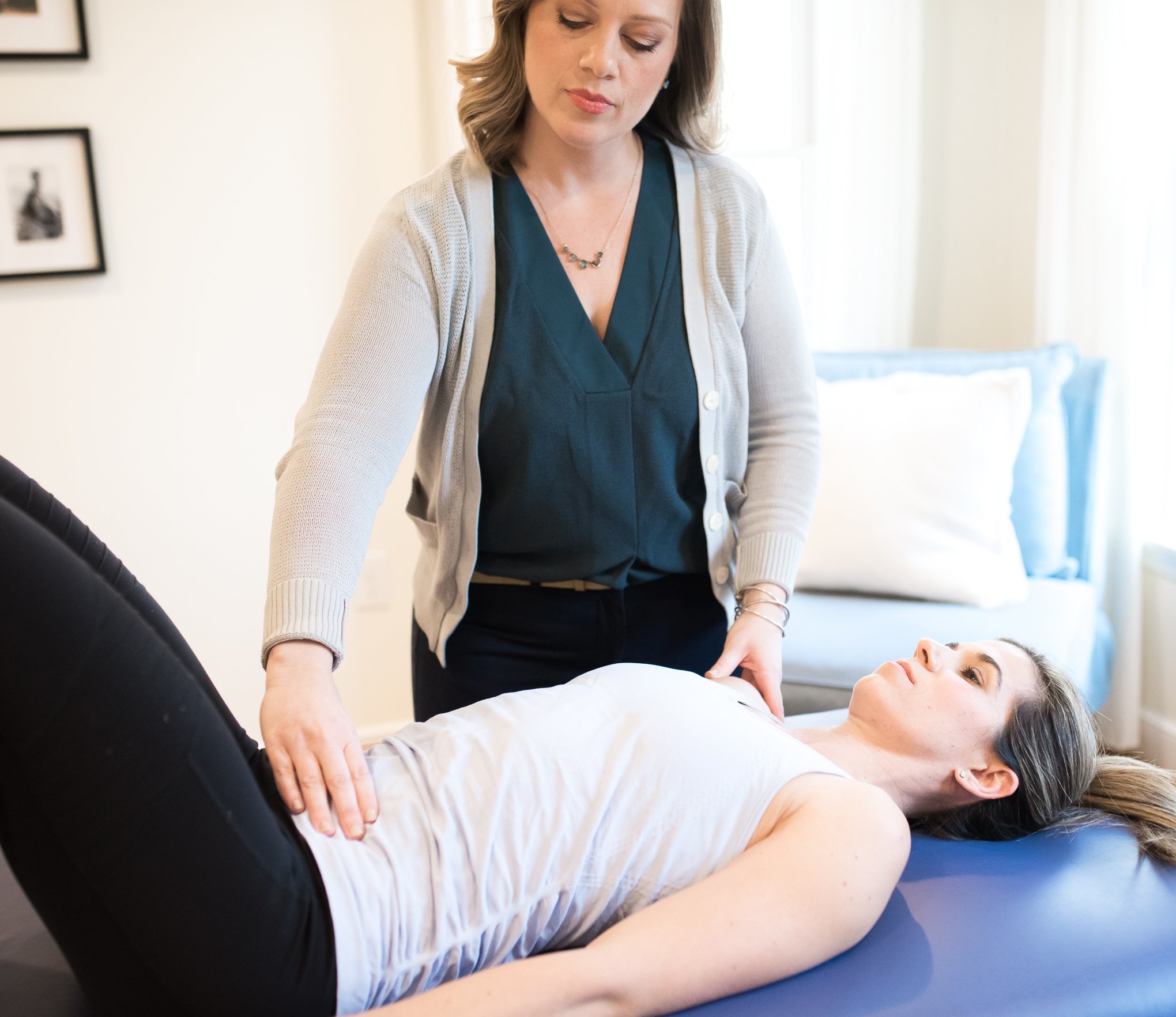
Most people assume pelvic floor PT means doing Kegels. But when the problem is tension and guarding, that’s actually the opposite of what’s needed. The goal is to release — to get the muscles to let go, and to help the nervous system understand that the threat has passed. Here’s what that looks like in practice:
Assessment
Your PT will look at the health of the tissue around the vulva and urethra and assess the pelvic floor muscles internally for tension, tenderness, and coordination. It’s a thorough evaluation — and for a lot of patients, it’s the first time someone has looked at the full picture and connected the dots.
Releasing the guarding pattern
Treatment includes hands-on work to release tight muscles, breathing exercises to shift the nervous system out of its protective state, and rhythmic movement (like walking, swimming, or yoga) that helps blood flow and muscle recovery. Education is a core part of the treatment here: once you understand why your body is doing this, the symptoms become less frightening, and that shift in itself can start to quiet things down.
Retraining muscle awareness
Most people with pelvic floor tension have no idea they’re doing it. The gripping becomes so habitual it’s subconscious, like clenching your jaw under stress without realizing it. Part of the treatment is learning to notice that pattern and, eventually, to intentionally release it.
Addressing hydration and bowel habits
We often see people restricting their fluid intake in order to pee less, but this actually makes things worse, since concentrated urine irritates the bladder lining and increases urgency. Constipation is another contributor because stool sitting in the colon presses directly on the bladder and worsens symptoms. Both are addressed during treatment. For a deeper look at daily habits that affect bladder health, see our post 8 Bladder Habits That Matter for Pelvic Health.
A randomized controlled trial found that pelvic floor myofascial therapy improved symptoms in 59% of patients with bladder pain syndrome and UTI-like symptoms, compared to 26% in a control group receiving general massage — more than double the response rate.Source: FitzGerald MP et al., J Urol, 2012.
Your UTI Symptoms Might Be a Pelvic Floor Problem If…
• You keep getting UTIs (or what feels like UTIs) more than two or three times a year
• Your urine cultures consistently come back negative but the symptoms remain
• You’ve completed multiple antibiotic courses with no lasting relief
• Symptoms started after a confirmed UTI and never fully resolved
• You feel like you have to pee all the time, but can’t completely empty your bladder
• Stress or hormonal shifts seem to make things worse
• You’re in perimenopause or menopause and this is happening more often
What to Do If Your UTI Keeps Coming Back
Always start with a urine culture to rule out an active infection — if it's positive, treat it. If it's negative, especially more than once, pelvic floor physical therapy is a good next step.
At Boston Pelvic Physical Therapy in Melrose, MA, this is one of the most common things we treat. If you'd like to talk things through before booking, we offer a free 15-minute discovery call at bostonpelvicpt.com. Not in the Boston area? You can find a pelvic floor PT near you at pelvicrehab.com.
Frequently Asked Questions
Can tight pelvic floor muscles really cause UTI symptoms?
Yes. The pelvic floor wraps directly around the bladder and urethra. Chronic tension there can produce urgency, burning, frequency, and incomplete emptying, all without an active infection present.
My culture was negative, but my doctor prescribed antibiotics anyway. Should I take them?
That’s ultimately a conversation with your provider. What’s worth bringing up is that antibiotics don’t address pelvic floor tension, and repeated courses without a confirmed infection can disrupt the vaginal microbiome over time, potentially making symptoms worse. A negative culture is worth taking seriously as a data point, not dismissing.
How quickly does pelvic floor physical therapy help with bladder symptoms?
Many patients notice a shift within a few sessions. A typical course of care is six to twelve sessions, combined with a home program.
Is this the same as interstitial cystitis?
Not necessarily. Interstitial cystitis (IC) is a distinct bladder condition with its own diagnosis. Research has found, however, that 85% of IC patients also have pelvic floor tension, making pelvic floor physical therapy an important part of treatment even when IC is confirmed. A thorough assessment helps clarify what's driving your symptoms. Source: Yu WR et al., Pain Physician, 2022 (PubMed ID: 36375205)
Does this happen to men too?
Yes. Men with chronic prostatitis can experience the same pattern — repeated antibiotic courses, no lasting relief, and a urine culture that keeps coming back negative. Pelvic floor tension is frequently the underlying cause. Different anatomy, same mechanism.
Sources
Wolff BJ et al., Int J Gynaecol Obstet. 2019 May;145(2):205-211 — PubMed ID: 30758844
Barrientos-Durán A et al., Front Cell Infect Microbiol. 2020 — vaginal microbiome disruption from antibiotic use
AUA/CUA/SUFU Recurrent UTI Guidelines, 2019
Tan-Kim J, Shah NM, Menefee SA. Am J Obstet Gynecol. 2023;229(2):143.e1-9 — vaginal estrogen and recurrent UTI prevention, Kaiser Permanente Southern California
FitzGerald MP et al., J Urol. 2012 Jun;187(6):2113-2118 — myofascial PT vs. general massage RCT
Yu WR et al., Pain Physician. 2022 Nov;25(8):E1315-E1322 — PubMed ID: 36375205